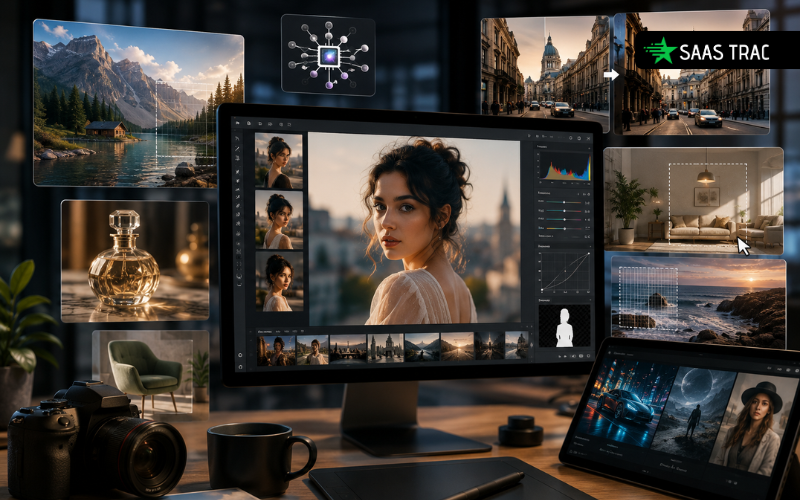
AI image editing has come a long way from the early days of smudgy faces and melted fingers. In 2026, the best AI Image Editors can generate and edit photos with a level of realism that’s genuinely difficult to distinguish from real camera work. Whether you’re a photographer, a marketer or a creative experimenter, the right AI image tool can save you hours of work. AI Image Editors have transformed the creative landscape in remarkable ways. After editing and refining images, creators who want to turn their final visuals into printed projects can use the best photo book software to organize photos into polished albums, portfolios, or keepsake books.
To help you cut through the noise, here are seven of the best AI image editors that consistently deliver when it comes to photo realism and detail.
1. NanoBanana 3
Google’s upcoming NanoBanana 3 model is expected to be one of the most capable AI image editors for creators who demand photorealistic quality. Among all AI Image Editors, it represents a significant leap over previous versions, with dramatically improved handling of skin textures, lighting, and fine environmental details.
What makes it stand out:
NanoBanana 3 excels at generating images that look like they were shot on a professional camera. Skin tones are natural and nuanced, fabric textures are convincing, and lighting behaves the way it would in a real-world setting. The model also handles complex compositions well, maintaining coherence even when multiple subjects and background elements are involved.
Best for:
Portrait work, product photography mockups, and any project where you need output that could pass as a real photograph without raising questions.
Worth noting:
The editing tools built around the model give you granular control over specific areas of an image, so you can refine details without regenerating the entire picture. For creators who care about precision, this level of control is a major advantage.
Kaze AI has carved out a strong niche among creators who want photorealistic results combined with an intuitive, streamlined workflow. It’s a tool that manages to be both powerful and approachable, which is harder to find than you might think. When comparing AI Image Editors, Kaze stands out for its user-friendly approach.
What makes it stand out:
Kaze AI’s strength lies in its ability to interpret natural language prompts with unusual accuracy. Where many tools require you to learn specific keyword formulas to get good results, Kaze AI understands conversational descriptions and translates them into detailed, realistic images. Its rendering of materials like glass, metal, water, and fabric is particularly impressive.
Best for:
Creators who want high-quality photorealistic output without spending a lot of time learning prompt engineering tricks. It’s also a strong choice for commercial and editorial imagery where material accuracy matters.
Worth noting:
Kaze AI also offers useful editing features that let you modify specific elements of a generated image, such as changing lighting direction or swapping out background environments, while keeping the rest of the image intact.
3. Pollo AI
Pollo AI is best known as a video generation platform, but its image editing and generation capabilities are genuinely impressive in their own right. It’s a versatile tool that handles both stills and motion, making it a smart choice for creators who work across multiple content formats. As one of the most versatile AI Image Editors, it bridges the gap between static and motion content.
What makes it stand out:
Pollo AI delivers strong photorealistic image generation with a particular talent for human subjects and natural environments. The platform’s interface is clean and creator-friendly, making it easy to iterate quickly on ideas. Because it also supports video generation, you can take a still concept and extend it into motion content without switching tools.
Best for:
Content creators and marketers who need both images and video and want a unified platform. It’s also a great option for social media creators who need to produce high volumes of polished visual content efficiently.
Worth noting:
The cross-format workflow is a genuine time-saver. Being able to go from a photorealistic still to a short video clip within the same platform eliminates the friction of jumping between different tools and re-uploading assets.
4. Adobe Firefly
Adobe Firefly benefits from being deeply integrated into the Creative Cloud ecosystem that millions of professionals already use daily. If you live in Photoshop or Lightroom, Firefly brings AI generation and editing directly into your existing workflow. Among enterprise-grade AI Image Editors, Adobe Firefly offers unmatched integration.
What makes it stand out:
Firefly’s generative fill and expand features are among the most refined in the industry. You can select an area of a real photograph and replace or extend it with AI-generated content that matches the lighting, perspective, and grain of the original image seamlessly. The results blend so naturally that the edits are often undetectable.
Best for:
Professional photographers and designers who already work within Adobe’s ecosystem and want AI tools that enhance rather than replace their existing process.
Worth noting:
Because Firefly is trained on Adobe’s licensed stock library, it’s one of the safest options from a commercial licensing perspective. If intellectual property concerns matter to your work, this is a meaningful advantage.
5. Midjourney
Midjourney has been a dominant force in AI image generation since its early versions, and its latest updates have pushed its photorealism capabilities to new heights. Once known primarily for its artistic and stylized output, Midjourney now produces images that rival real photography in the right hands. When evaluating AI Image Editors for artistic quality, Midjourney consistently ranks at the top.
What makes it stand out:
Midjourney’s rendering engine produces images with a distinctive richness and depth. Colors are vibrant but natural, lighting is dramatic but believable, and compositions feel intentional rather than random. The community around Midjourney is also a valuable resource, with extensive shared knowledge about how to get the best results.
Best for:
Creators who want photorealistic images with a slightly elevated, editorial quality. It’s particularly strong for lifestyle imagery, architectural visualization, and conceptual photography.
Worth noting:
Midjourney’s interface is still primarily Discord-based, which can feel unintuitive for new users. There is a web interface available now, but the learning curve is steeper than some alternatives on this list.
6. Stable Diffusion
Stable Diffusion remains the go-to choice for creators who want maximum control over every aspect of the image generation process. As an open-source model, it offers a level of customization and flexibility that no closed-platform tool can match. For developers and technical users exploring AI Image Editors, Stable Diffusion provides unparalleled flexibility.
What makes it stand out:
With the right model checkpoints, LoRAs, and settings, Stable Diffusion can produce photorealistic images that are indistinguishable from real photographs. The open-source ecosystem means there are specialized models fine-tuned for specific use cases like portraits, product photography, and architectural rendering.
Best for:
Technical users, developers, and advanced creators who want full control over their generation pipeline and are comfortable with a more hands-on setup process.
Worth noting:
The tradeoff for all that flexibility is complexity. Getting Stable Diffusion to produce consistently photorealistic results requires time spent learning the tools, testing different models, and fine-tuning settings. It’s powerful but not plug-and-play.
7. Flux by Black Forest Labs
Flux has emerged as a serious contender in the photorealistic AI image space, earning praise for its exceptional handling of text rendering, human anatomy, and natural lighting. It’s a newer player compared to some others on this list, but it has gained traction quickly for good reason. Among newer AI Image Editors, Flux has made a remarkable impact in a short time.
What makes it stand out:
Flux produces some of the most anatomically accurate human figures of any AI image model currently available. Hands, fingers, and facial features are rendered with a consistency and correctness that many competing models still struggle with. Its text rendering within images is also notably reliable, which is a common weak point for other tools.
Best for:
Creators who need accurate human subjects and clean text integration in their images, such as for mockups, social media graphics, or promotional materials that combine photography with typography.
Worth noting:
Flux is available both through its own platform and through various third-party integrations, giving you flexibility in how you access it. The model continues to receive updates, and each iteration has shown meaningful improvements in realism and detail.
Finding the Right Tool for Your Workflow
Each of these tools brings something different to the table. Among leading AI Image Editors, NanoBanana 3 and Kaze AI lead the pack in raw photorealistic quality. Pollo AI offers unmatched versatility for creators who work across images and video. When choosing among AI Image Editors, consider your specific workflow needs and technical expertise.
The best choice depends on your specific needs, your technical comfort level, and the kind of content you produce. All of these options are accessible right now, and they’re all getting better fast. There has never been a better time to explore what AI can do for you. The evolution of AI Image Editors continues to accelerate, bringing professional-grade capabilities to creators at every level.